
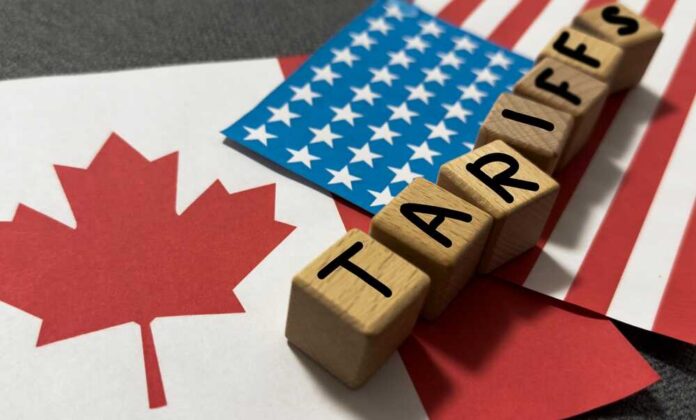
Canada answered President Trump’s 50% tariffs with a “dollar-for-dollar” counterstrike set to hit key U.S. exports after Labor Day.
Story Snapshot
- President Trump levied new 50% tariffs on select Canadian goods in July.
- Prime Minister Mark Carney said Canada will match tariffs “dollar for dollar.”
- Canada targeted steel, dairy, appliances, farm equipment, pulp and paper, and electronics.
- Ottawa set the start date after Labor Day, with Sept. 8 cited across outlets.
Canada Sets A Clear Line And A Clock
Prime Minister Mark Carney said Canada will impose matching tariffs against the United States. He tied the move to President Trump’s July action that added 50% duties on certain Canadian imports. The White House framed its tariffs as a response to unfair treatment of American goods.
Carney answered with a promise to protect Canadian workers and businesses, and to do it “dollar for dollar.” Several outlets reported an effective date after Labor Day, centered on Sept. 8.
Ottawa’s response focuses on pressure points with political bite. Reports list steel, dairy, appliances, agricultural equipment, pulp and paper, and electronics. Those sectors link to U.S. industrial jobs, farm states, and swing regions.
The message is simple: pain shared is pain noticed by Congress and governors. Canada used the same playbook during the 2018 steel and aluminum fight. Back then, Ottawa levied targeted tariffs to get Washington to the table.
What Triggered The Move
The White House issued a fact sheet on July 20 stating Trump imposed additional 50% tariffs on certain Canadian goods. It cited Canada’s “discriminatory treatment of American products” as the reason. The measure revived a familiar pattern. Washington turns the screw.
Ottawa responds in kind. Then both sides test who can hold their line longer under pressure from factories, farms, and consumers. The tit-for-tat is not new, but the stakes feel higher with rates at 50%.
Carney’s team linked its retaliation directly to those U.S. tariffs and rejected an American offer at the table. Reuters quoted the stance: “We cannot accept what they’ve offered and we will not give what they’ve asked.”
Canada then instructed negotiators to return to Ottawa and set the counter-tariff path. The schedule places the start just after summer, when businesses retool orders for fall. That timing increases leverage by hitting when new contracts get set.
How Retaliation Works On The Ground
Retaliatory tariffs rarely “win” in a clean, economic sense. They raise prices at home and abroad. They also change who feels the squeeze first. Canada’s targeted list targets products with easy substitutes from non-U.S. suppliers or domestic production.
That helps limit pain inside Canada while amplifying it for U.S. exporters. Research on the 2018 episode found higher prices and welfare costs in Canada, but also found the policy signaled resolve. That signal often matters in talks.
Canada announces retaliatory tariffs on U.S. goods starting Sept 8. "Dollar-for-dollar" response to Trump's 50% tariffs. Carney: "Because we were attacked." 📌 Sources: Al Jazeera, Bernama #Canada #US #TradeWar #Tariffs #MarkCarney #SeptentriaNews pic.twitter.com/I4ywondyWT
— Septentria News (@SeptentriaNews) August 26, 2026
While the White House says the 50% rate counters unfair barriers, Canada says the mirror response guards its jobs and farmers. Both can be true. But both cannot dodge math.
Tariffs are taxes that land on someone. The smart path is tough leverage now, then a landing zone that keeps core industries strong and restores normal trade without permanent price hikes.
What To Watch Next
Watch the calendar and the product list. If Canada’s tariffs take effect after Labor Day, as reported, importers will rush to front-load shipments or seek alternative suppliers. Expect quick strains in cross-border steel and farm equipment orders.
Retailers that sell large appliances and consumer electronics may delay promotions or raise sticker prices. If the pressure builds in farm states and industrial counties, the next step is clear: staff-to-staff talks to narrow the lists and lower rates.
A Long, Repeating Playbook
Canada and the United States have traded tariff blows before and will again. History shows a cycle: tariffs, retaliation, negotiation, and partial unwind.
The political logic is direct. Each side must show backbone to voters who make the stuff at risk. The economic logic is also direct. The longer tariffs last, the more they distort prices and supply lines. The best outcome is a short, sharp standoff that resets terms and gets out of the way of the real economy.
Sources:
youtube.com, cnbc.com, reuters.com, theglobeandmail.com, en.wikipedia.org, mlex.com