
The federal government quietly turned airport security lines into the front line of an Ebola containment strategy, and then asked its own people to volunteer to stand there.
Story Snapshot
- CDC urged its own staff to volunteer at airports to help screen travelers arriving from the Ebola-hit Democratic Republic of the Congo and neighboring countries.[1]
- Only a few major U.S. airports can receive these travelers, and every American arriving from those regions must undergo “enhanced” health screening.[1]
- CDC openly admits airport checks cannot catch Ebola during its incubation period, so screening is just one layer in a larger control strategy.
- The policy raises a blunt question: are we protecting health, or performing security theater to reassure nervous voters?
Why the CDC Put Volunteers Between You and Ebola
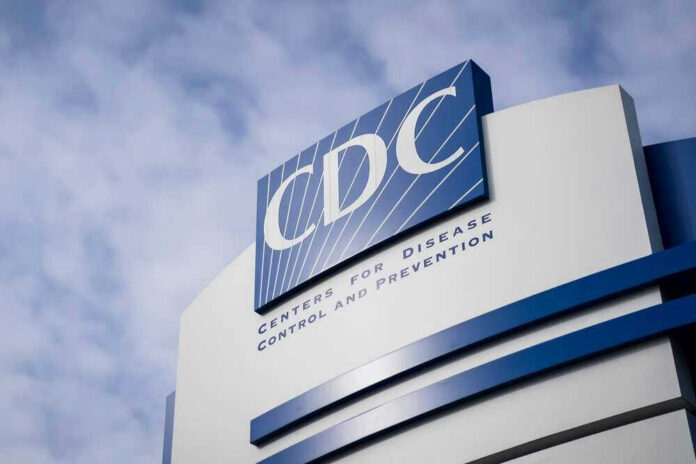
The Centers for Disease Control and Prevention sent an “urgent request” to employees, asking them to volunteer at airports to screen returning travelers from central Africa for signs of Ebola, including fever and other early symptoms.[1][2]
That plea followed a worsening outbreak in the Democratic Republic of the Congo and in nearby Uganda and South Sudan, where cases were spreading faster than health workers could contain.[1][2]
Federal officials knew global air travel could turn one regional crisis into an international problem, fast.
Federal health officials then restricted where these travelers could enter the United States, funneling them through a small set of international gateways such as Washington Dulles, Atlanta’s Hartsfield-Jackson, Houston’s Bush Intercontinental, Chicago O’Hare, and Miami International Airport.[1][2]
The Centers for Disease Control and Prevention guidance says that as of late May 2026, U.S. citizens and nationals who have recently been in the Democratic Republic of the Congo, Uganda, or South Sudan may still enter but must undergo enhanced public health entry screening.
CDC asks staff to volunteer to help with Ebola screenings at airports amid outbreak https://t.co/jzGjkEyLpe
— ABC7 Eyewitness News (@ABC7) May 27, 2026
What “Enhanced Screening” Really Looks Like
Travelers from the outbreak region face a layered set of protocols from the moment they land. Centers for Disease Control and Prevention documents describe enhanced entry screening that includes questions about symptoms, exposure history, temperature checks, and a review of where they have been in the prior 21 days.
Officials also collect detailed contact information and enroll these travelers in daily monitoring for three weeks after departure from the affected countries, often using automated text messages to remind them to check and report their health.
Travelers who show possible Ebola symptoms receive immediate additional evaluation by a public health officer at the airport. If that evaluation supports concern for Ebola, the person is transferred to a hospital prepared for further testing and isolation.
Non–U.S. citizens who have recently been in the Democratic Republic of the Congo, Uganda, or South Sudan are currently barred from entry, so the screening system focuses on returning Americans and other permitted travelers.[1][2] On paper, this looks like a tight net.
The Built-In Limits That Officials Quietly Acknowledge
The virus does not care about paperwork. Ebola’s incubation period can last up to 21 days, and people who are infected but not yet sick will walk straight through airport screening without setting off any alarms.
Centers for Disease Control and Prevention guidance bluntly concedes that entry screening cannot identify travelers who are infected but have not started showing symptoms, which is why it stresses that screening is only one part of a broader, layered public health approach.
That admission undercuts any illusion that a thermometer at the jet bridge can seal the borders.
#BREAKING New Guidelines due to Ebola Outbreak: All travelers from DRC, Uganda, or South Sudan must enter the U.S. via Washington Dulles International Airport (IAD) for CDC and CBP health screenings. pic.twitter.com/bAstNxq7BO
— Trend Wave Tide News (@SusmitaMaj26228) May 21, 2026
Staffing also tells a story. When an agency emails its own workforce begging for volunteers to stand posts at airports, it signals an urgent surge response and, just as clearly, that regular capacity was not built for this level of hands-on screening.[1][2]
Reporting describes Centers for Disease Control and Prevention leaders asking employees to help bolster efforts to check travelers for symptoms like fever, reinforcing that the system depends on rapid redeployment rather than a standing, permanent screening corps.[1]
Security Theater, Real Safeguard, or Both?
Critics of big-government health responses see a familiar pattern: when a frightening outbreak hits the headlines, leaders roll out highly visible measures at airports because cameras can capture them, not because they represent the strongest scientific intervention.
The CDC publications frame airport screening as one modest part of a larger package that includes travel restrictions, daily monitoring, and rapid isolation of suspected cases. Yet media coverage and political messaging often present the checkpoint as the main shield.
The question is simple and fair: if screening cannot catch Ebola during incubation, and if most detected cases will emerge later through self-reporting and follow-up monitoring, how much value does a volunteer-staffed airport line actually add?
Officials have not released hard data on how many cases these checkpoints detect versus how many are later detected in hospitals or local health departments. Without those numbers, supporters lean on symbolism and prudence; skeptics see a photo opportunity dressed up as science.
What a Common-Sense Approach Would Demand Next
American skepticism of unchecked bureaucracy suggests a straightforward accountability checklist. First, the public deserves transparent evidence: how many travelers were screened, how many were pulled aside, and how many Ebola cases were ultimately found through airport checks versus post-arrival monitoring or routine medical visits.
Second, Congress and state partners should review the training, qualifications, and supervision of these volunteers to ensure that “urgent request” did not translate into rushed, underprepared front-line work.[1][2]
A layered defense against a deadly virus is reasonable; pretending that a single visible layer is a silver bullet is not. CDC officials have at least acknowledged that reality in their own guidance, framing screening as one element among travel restrictions, contact tracing, and 21-day follow-up.
The real test is whether policymakers and the media will match that candor, stop overselling the checkpoint, and start demanding outcome data that prove where these measures work—and where they merely look good on television.
Sources:
[1] Web – CDC asks staff to volunteer to help with Ebola screenings at airports …
[2] Web – CDC Asks Workforce to Volunteer for Airport Ebola Screenings