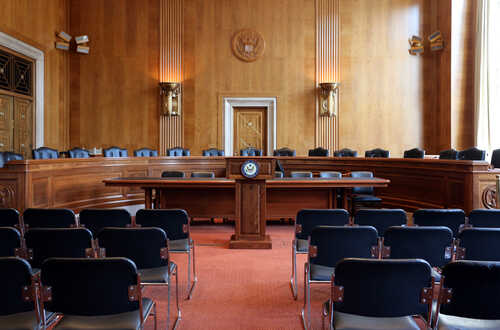
One of the most famous doctors in America just told the Senate he would rather stay silent than risk landing “behind bars.”
Story Snapshot
- Dr. Anthony Fauci invoked his Fifth Amendment right over 100 times in one Senate hearing.
- He said he acted “on the advice of counsel” because he believes key senators want him prosecuted.
- Republicans argue his blanket presidential pardon means he has no right to plead the Fifth at all.
- The clash exposes a deep fight over Covid origins, government trust, and what accountability should look like.
A once-cooperative witness turns into a wall of silence
Dr. Anthony Fauci did something he has never done in more than 250 congressional appearances: he refused to answer a single question.
At a Republican-led Senate Homeland Security hearing on Covid origins and his pandemic decisions, Fauci read prepared remarks and then shut down every inquiry with the same line. “Under the advice of my attorneys, I will invoke my right under the Fifth Amendment of the Constitution to refrain from answering your questions,” he told the committee.
BREAKING: Fauci invokes Fifth Amendment and declines to testify in GOP-led COVID-19 hearing pic.twitter.com/YD5I21Zjq8
— Insider Paper (@TheInsiderPaper) July 29, 2026
Reporters and video feeds counted more than 100 such refusals in a single session. Senators asked about Wuhan lab funding, gain-of-function research, vaccine injuries, his newly released pandemic diaries, even trivial questions meant to mock the blanket invocation.
Each time, Fauci repeated that he “respectfully decline[d] to answer based upon my rights under the Fifth Amendment.” The calm tone only sharpened the drama: a man once treated as America’s doctor now treated the Senate like a criminal courtroom.
Why Fauci says he is pleading the Fifth
Fauci framed his silence as a defense against what he called an “unhinged obsession” by the committee’s Republican chair, Senator Rand Paul.
In his opening statement, Fauci said Paul’s “sole reason” for hauling him in was to force “anything” from his mouth that could justify Paul’s repeated promise that Fauci should end up “behind bars.” Fauci argued any answer—even a small slip—could be twisted into a perjury case, so exercising his right against self-incrimination was the only way to avoid that trap.
He also tried to remind viewers of his past cooperation. Fauci pointed out that he has testified before Congress hundreds of times and worked with lawmakers from both parties during crises from HIV to Ebola to Covid.
He said it “pains” him to invoke the Fifth because of his respect for Congress and his record of transparency, but claimed that “any reasonable person” watching Paul’s crusade would see why he feared legal danger.
Republicans say a pardon stripped his Fifth Amendment shield
Committee Republicans did not accept Fauci’s explanation. Several pointed to a key fact: when Joe Biden left office, he issued a sweeping, preemptive pardon for Fauci covering federal offenses tied to his Covid response. Senator Josh Hawley told Fauci bluntly, “You don’t have any rights under the Fifth Amendment because you’ve been pardoned.”
He argued that a person who cannot be prosecuted for the pardoned crimes cannot claim fear of self-incrimination on those topics.
Senator Paul went further, warning Fauci that the committee had already scheduled a vote to hold him in contempt for refusing to answer. Paul said Fauci was “citing a privilege that is unsupported because of his blanket pardon and because he waived the privilege by testifying at the start.”
This reflects a long-standing legal debate. The National Constitution Center notes that in a case called Brown v. Walker, the Supreme Court held that a fully pardoned witness cannot invoke the Fifth to avoid testifying about the pardoned conduct. Conservatives on the panel leaned hard on that precedent.
What questions Fauci refused to answer
Fauci’s blanket Fifth Amendment claim covered some of the most contested questions of the Covid era. Senators pressed him on funding that flowed from U.S. agencies to research tied to Wuhan, including work critics say risked “gain-of-function” changes in coronaviruses.
They asked about diary entries and emails released before the hearing, including passages that raised questions about how he framed risk to the public and whether any records were deleted or withheld.
Other questions focused on personal benefit and bureaucratic power. Hawley accused Fauci of “getting rich” from the pandemic and using government employees to secure cash awards. Still others tried to pin down whether Fauci’s past testimony about masks, lab-leak theories, and vaccine mandates had been misleading.
None of those lines of questioning received a substantive response. Every allegation remains on the record unanswered, which fuels suspicion for critics and frustration for anyone who wanted clarity.
What this fight reveals about power, rights, and trust
Legally, Fauci’s move sits inside a normal pattern. Witnesses in hostile congressional investigations often use the Fifth Amendment when they believe their answers could later be used in a criminal case. Using the Fifth does not prove guilt; it signals a calculation about risk.
But politically, when the public already doubts Covid-era institutions, watching the face of the pandemic say “I decline to answer” over 100 times feels less like dry constitutional law and more like a showdown over truth itself.
Two points stand out. First, Americans have a clear right not to help the government prosecute them, even when the government insists they must speak. That protection matters as much for disliked officials as for ordinary citizens. Second, a blanket pardon followed by blanket silence offends many people’s sense of accountability.
If the pardon really erased Fauci’s criminal exposure, then hiding behind the Fifth looks less like self-defense and more like stonewalling. The courts, not cable clips, will have to sort that out.
Sources:
youtube.com, axios.com, cnn.com, statnews.com, abcnews.com, wsj.com, facebook.com