
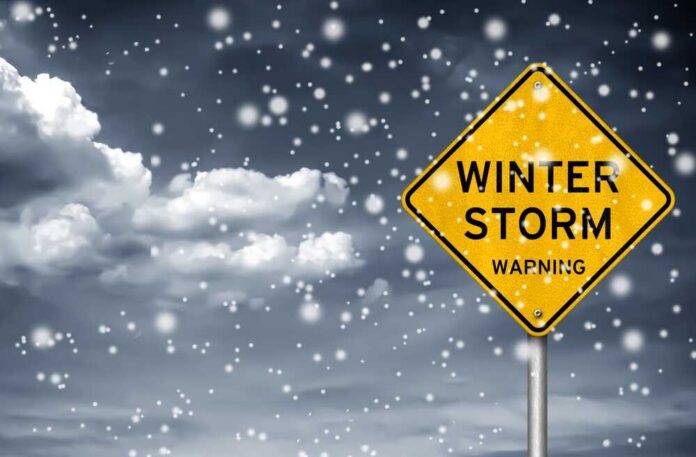
Extreme cold grips two-thirds of America, claiming at least 41 lives amid power outages for 400,000 and the most disruptive storm in airline history—exposing vulnerabilities President Trump’s administration must now address to protect families from nature’s fury.
Story Snapshot
- Powerful winter storm hit 200 million Americans, causing 41 confirmed deaths plus 20 suspected weather-related fatalities.
- Over 400,000 without power in southern states, revealing grid weaknesses in unprepared regions.
- American Airlines canceled 9,000+ flights—worst in 100 years—stranding travelers nationwide.
- National Weather Service warns of longest cold spell in decades, with more Arctic blasts incoming.
Storm Scale and Death Toll
A massive winter storm swept across two-thirds of the United States over the weekend into Monday, impacting roughly 200 million people. Heavy snow, rain, sleet, and freezing temperatures battered the Northeast, South, and Plains.
By Wednesday, January 28, 2026, officials confirmed at least 41 deaths from storm conditions or related accidents, with about 20 more appearing weather-linked.
Causes ranged from hypothermia and car crashes to snow shoveling heart attacks and power outage falls, like a 90-year-old woman in Nashville. New York City reported 10 cold-related deaths.
Winter storm: brutal cold. At least 32 dead; ~220M under alerts. Pray for safety, crews restoring power, and neighbors without heat. ❄️🧊https://t.co/0aipg43I76#WinterStorm #Pray pic.twitter.com/irLFXQM7qB
— KLTT 670AM, The Truth (@kltt670) January 28, 2026
Prolonged Cold and Infrastructure Failures
Extreme cold persisted through the eastern half of the country Monday to Wednesday, with temperatures 15-25 degrees below late January averages. The National Weather Service called it potentially the longest such cold in decades.
Over 400,000 customers lacked power Wednesday, concentrated in Tennessee, Mississippi, Louisiana, Texas, Kentucky, Florida, South Carolina, and Georgia. Southern grids, unaccustomed to Arctic blasts, buckled, leaving homes unheated and vulnerable seniors at risk in assisted living facilities. Nashville sheltered over 400 in warming centers.
Transportation Chaos and Health Crises
American Airlines canceled over 9,000 flights, its most disruptive storm in 100 years, with Sunday seeing 11,000 cancellations—the highest since the pandemic. Dallas, Boston, and New York suffered worst.
A Nashville hospital treated 46 children for carbon monoxide poisoning from unsafe heating during outages. Snowplow and sledding accidents added to the toll. Lake-effect snow warnings hit upstate New York through Thursday, promising 1-2 feet in Buffalo and Syracuse.
These cascading failures highlight how past neglect of resilient infrastructure—burdened by overspending elsewhere—endangers American families. President Trump’s focus on energy independence and deregulation offers hope for fortifying grids against such events, prioritizing citizens over globalist distractions.
Forecast Threats and Long-Term Lessons
Another Arctic blast looms later this week, potentially shattering records. A possible bomb cyclone threatens Massachusetts, with uncertain forecasts for hurricane-force winds and waves. Experts like CBS meteorologist Nikki Nolan note frigid air’s grip driving subnormal temperatures.
This crisis underscores needs for robust power systems and local preparedness. Southern states’ outages reveal overreliance on fragile networks; Trump’s pro-energy policies can rebuild stronger, safeguarding communities without government overreach.
According to CBS News, dozens of people across multiple states have been confirmed dead after a powerful winter storm swept through large parts of the country https://t.co/e7DJ07wYWv
— WCBI News (@WCBINews4) January 28, 2026
Communities rally with emergency services and plows battling elements. Yet, disruptions to commerce and supply chains hit working families hardest. As Trump leads in 2026, fortifying infrastructure aligns with conservative values of self-reliance and protection from preventable disasters.
Sources:
https://www.cbsnews.com/news/winter-storm-extreme-cold-deaths/