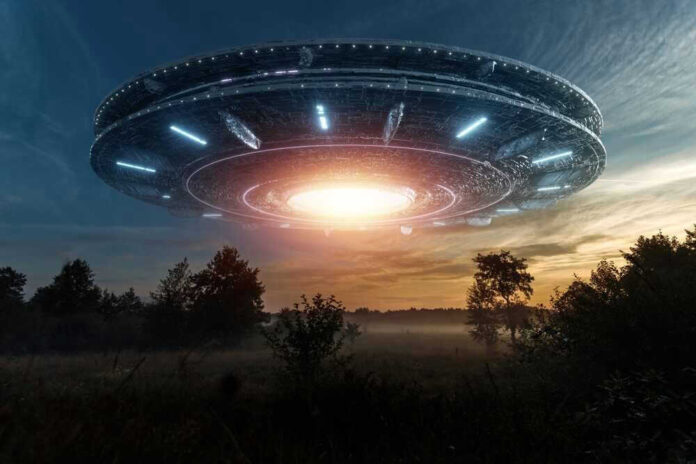
The death of Erich von Däniken closes the book on a man who helped normalize fringe “ancient aliens” thinking, feeding today’s broader war on truth that so often bleeds into politics, faith, and respect for Western civilization.
Story Snapshot
- Swiss author Erich von Däniken, whose bestseller “Chariots of the Gods?” popularized ancient astronaut theories, has died at age 90.
- His books sold tens of millions of copies, helping turn speculative “alien archaeology” into a global media industry.
- Scholars long condemned his claims as pseudoscience that misrepresents ancient history and undermines serious research.
- His legacy highlights how sensational narratives can erode trust in expertise and distort debates about faith, history, and culture.
The Man Behind “Chariots of the Gods?”
Erich von Däniken, born in 1935 in Zofingen, Switzerland, grew up in a devout Catholic family and studied at a Jesuit school where he learned Latin and Greek and read ancient texts that shaped his later questions about the meaning of “gods.”
He worked in hotels as a waiter, barkeeper, and then manager in Davos, drafting his first book at night while holding a day job. That manuscript became “Chariots of the Gods?”, the work that would define his life.
🚨Erich von Däniken Dead (1935–2026): The Man Who Asked If the Gods Were Astronauts
Erich von Däniken, the Swiss author who ignited global debate over ancient astronauts and extraterrestrial influence on human history, has died at age 90.
His 1968 bestseller Chariots of the… pic.twitter.com/zKCU6mDlbq— Skywatch Signal (@UAPWatchers) January 11, 2026
Published in 1968 in German and 1969 in English, “Chariots of the Gods? Unsolved Mysteries of the Past” argued that advanced extraterrestrials visited Earth in ancient times and jump-started human technology and religion.
The book suggested that monuments such as the Egyptian pyramids and Mesoamerican sites, along with stories in ancient religious texts, were evidence of alien contact. Its success catapulted von Däniken from hotel manager to international celebrity author.
How Ancient Astronaut Theories Captured a Global Audience
During the late 1960s and 1970s, amid the space race and moon landings, von Däniken’s ideas took hold in a culture already fascinated by rockets, astronauts, and the possibility of life beyond Earth.
He argued that structures like Peru’s Nazca Lines might be ancient airfields or signals for alien spacecraft, and that odd-looking figures in art and carvings were early depictions of space travelers. These claims captivated millions of readers hungry for mystery and willing to question conventional explanations.
Publishers and filmmakers quickly recognized the commercial potential of this blend of speculative science, archaeology, and spirituality. “Chariots of the Gods?” spawned sequels such as “Gods from Outer Space” and “Return to the Stars,” as well as documentaries and TV programs that brought his theories to audiences who might never read the books.
His official biography credits him with thousands of lectures worldwide and roughly seventy million books sold in more than thirty languages, making him one of the most commercially successful popularizers of alternative history in the twentieth century.
Pseudoscience, Faith, and Respect for Human Achievement
Academic archaeologists and historians consistently rejected von Däniken’s interpretations as pseudoscience, stressing that there is no credible evidence that extraterrestrials built the monuments or wrote the sacred texts of ancient civilizations. Researchers argue that these cultures had the tools, engineering knowledge, and social organization to build their own pyramids, temples, and cities.
By crediting aliens instead of human beings, critics say, ancient astronaut narratives downplay the ingenuity of Egyptians, Mayans, and other peoples and risk reinforcing patronizing or racist assumptions about their abilities.
For many everyday readers, though, von Däniken’s work blurred the lines between faith, science, and entertainment. He portrayed himself as a rebel against religious and academic “orthodoxy,” insisting that traditional explanations were too narrow and unwilling to face anomalies.
That posture resonated with people distrustful of elites, but it also encouraged a worldview where anything challenging or mysterious could be rebranded as a cover-up or conspiracy. In that sense, his legacy fits into a broader cultural shift away from disciplined evidence toward sensational speculation.
A Legacy That Outlived Its Author
Von Däniken’s death on January 10, 2026, at age ninety, formally ends his personal output, but not the movement he helped launch. His books remain in print and in translation, and his ideas live on through imitators, documentaries, and the long-running “ancient aliens” subculture.
Many later TV series and authors borrowed his basic formula: spotlight unusual details at ancient sites, raise dramatic questions, and suggest extraterrestrial intervention without delivering solid proof. That formula became a durable business model for “mysteries of the past” programming.
For conservative readers who care about objective truth, ordered liberty, and respect for Western and biblical traditions, von Däniken’s career is a cautionary tale. He showed how mass media can take speculative ideas, package them as nonfiction, and shape public belief at scale without being anchored in rigorous scholarship.
In an age when political agendas, “woke” narratives, and global bureaucracies often play fast and loose with facts, his story underscores the importance of discernment—especially when slick storytelling tries to rewrite the past.
Sources:
Biography – Erich von Däniken official site
Chariots of the Gods? – Goodreads listing
Erich von Däniken, Swiss writer who spawned ‘alien archaeology,’ dies at 90 – ABC News
Chariots of the Gods? – Wikipedia
Erich von Däniken, author of Chariots of the Gods? – obituary – The Telegraph
Chariots of the Gods – Hugendubel listing