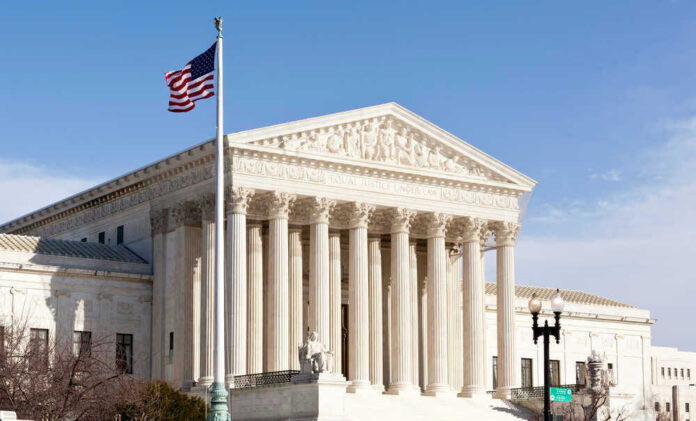
The Supreme Court has agreed to review whether President Donald Trump’s sweeping tariffs could redefine executive power.
Story Snapshot
- The Supreme Court will decide if Trump’s broad tariffs on nearly all imports exceed presidential authority.
- Billions of dollars and the future of small businesses are at stake as legal challenges heighten uncertainty.
- The Court’s ruling could set a precedent for executive power in trade policy for decades.
- Trump’s administration cites national security and drug interdiction as justification; critics warn of economic and constitutional harm.
Supreme Court Takes Up Trump’s Sweeping Tariffs: The Stakes Couldn’t Be Higher
The Supreme Court announced it will hear challenges to President Trump’s most sweeping tariffs, which target nearly every imported product and have already rattled American businesses.
The justices must decide whether federal law, specifically the International Emergency Economic Powers Act (IEEPA), grants the president authority to impose such broad trade restrictions without Congress.
This pivotal case consolidates lawsuits from small businesses and states that argue the tariffs are unlawful and economically devastating, with billions of dollars at stake.
The legal challenge centers on whether past emergency powers statutes actually permit a president to act unilaterally in matters that so fundamentally reshape the nation’s trade relationships.
Historically, Congress has controlled tariffs, but the 1977 IEEPA and the Trade Expansion Act of 1962 gave presidents greater latitude in limited circumstances. Trump’s actions mark the most aggressive use yet, prompting fierce debate over constitutional checks and balances.
The Supreme Court’s decision could permanently alter the balance of power between the executive and legislative branches, setting a precedent for future administrations seeking to bypass Congress on key economic decisions.
Small Businesses, States, and the Trump Administration: Who Stands to Win or Lose?
Key players in this dispute include President Trump, whose administration argues that the tariffs are essential for national security and in combating illicit fentanyl trafficking from countries like China and Mexico. On the other side are small businesses—such as Learning Resources, Inc. and V.O.S. Selections, Inc.—which claim the tariffs will cost them $100 million this year alone.
These plaintiffs, joined by several state governments, contend that the broad tariffs exceed statutory authority and inflict severe economic harm. The U.S. Trade Representative’s office supports the executive orders, emphasizing the need for flexibility to respond to international threats and unfair trade practices.
The case pits executive authority against judicial oversight at a time when many Americans are frustrated with years of unchecked government expansion.
Supporters of the tariffs say strong action is overdue after decades of globalist policies and weak border enforcement. Critics argue that, if upheld, such executive power could erode constitutional protections and encourage future overreach, threatening the very foundations of American government and free enterprise.
Legal Timeline: How We Got Here and What Happens Next
The controversy began in late May, when the U.S. Court of International Trade ruled that Trump’s tariffs exceeded presidential authority, issuing an injunction to block them. The Federal Circuit quickly stayed that injunction, allowing tariffs to remain in force while the appeals process played out.
On August 11, the President extended the suspension of reciprocal tariffs against China, keeping the pressure on foreign competitors. Now, with oral arguments scheduled for early November, the Supreme Court’s decision looms large over American businesses, supply chains, and consumers who may see prices rise even further in an already turbulent economy.
Business groups warn that continued legal uncertainty will disrupt supply chains and lead to market volatility, while the administration maintains that decisive action is required to protect American jobs and stem the tide of illegal drugs. The Supreme Court’s ruling will have both immediate and long-term consequences, potentially reshaping presidential authority for generations and determining whether future leaders can act alone in matters of major economic importance.
Impacts on the Economy, the Constitution, and Everyday Americans
If the Supreme Court upholds the tariffs, small businesses and consumers could face dramatic cost increases—while manufacturers, retailers, and farmers brace for the fallout from retaliatory measures abroad. Experts warn that such a precedent would chill foreign investment and further strain U.S. competitiveness, but supporters believe it is a necessary correction after years of globalist mismanagement.
The broader debate reflects deep frustration among conservative Americans who have watched government overreach and fiscal irresponsibility erode traditional values and economic security. The Supreme Court’s decision will either affirm the president’s right to act boldly or restore the constitutional balance that many see as essential for protecting liberty and prosperity.
Legal scholars and trade experts are closely watching the case, noting its potential to become a landmark moment in defining the limits of executive power. While supporters cite national security and the fight against illicit drugs, critics point to economic harm and constitutional risks.
With reliable coverage from outlets like SCOTUSblog and official court documents, Americans can follow the proceedings and understand what’s truly at stake—whether the Supreme Court will uphold the president’s authority or rein in unilateral government action that many fear undermines the Constitution and the principles of limited government.
Sources:
Supreme Court agrees to decide the fate of Trump’s tariffs
V.O.S. Selections, Inc. v. Trump (opinion and procedural history)