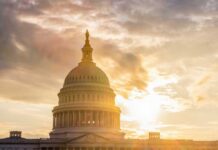


America faces a critical turning point as President Trump’s efforts to restore order at the border and rein in government spending trigger a historic standoff with Democrats, resulting in a full federal government shutdown.
Story Snapshot
- The government shutdown began at 12:01 a.m. EDT on October 1, 2025, after Congress failed to reach a funding deal.
- Partisan gridlock centers on healthcare, spending priorities, and Trump’s push for tougher border security.
- OMB orders federal agencies to prepare for layoffs, signaling aggressive measures against bloated bureaucracy.
- Essential services continue, but hundreds of thousands of federal employees face furloughs and uncertainty.
Partisan Deadlock Triggers Shutdown Amidst Calls for Fiscal Restraint
On October 1, 2025, the U.S. federal government officially shut down after neither chamber of Congress could pass a continuing resolution to fund federal operations. President Trump, backed by House Republicans, insisted on legislation that would clamp down on reckless spending and include major reforms to healthcare and border security.
Senate Democrats, meanwhile, refused to compromise, demanding expansions to social programs and blocking spending cuts. This impasse marks one of the most consequential budget battles in recent memory, with both sides entrenched in their positions as the fiscal year deadline passed.
Republican leaders argue that Democrats are prioritizing their “woke” agenda and government overreach over responsible stewardship of taxpayer dollars. Trump’s administration has made it clear that any funding bill must support real border security, end sanctuary policies, and roll back the excesses of the previous administration.
The shutdown follows a series of failed attempts in September to pass a bipartisan bill, with each side attaching policy riders reflecting starkly different visions for America’s future. The result is a total lapse in government funding—an outcome that leaves families, workers, and businesses nationwide in limbo.
Trump’s Border Security Demands and the Battle over Immigration Policy
Central to the current standoff are President Trump’s demands for stricter enforcement of immigration laws and an end to what he calls “open-border insanity.”
After a year of surging illegal crossings and failed border policies under Biden, Trump’s administration moved quickly in 2025 to sign executive orders declaring a national emergency at the border, halting catch-and-release, and mandating detention for immigrants charged with crimes.
The administration also eliminated protections for sanctuary locations, empowering ICE to conduct operations even in schools and churches.
These measures have drawn fierce opposition from Senate Democrats and left-wing advocacy groups, who claim they infringe on civil liberties and due process. Still, Trump supporters see these steps as long-overdue corrections to years of lawlessness and government complacency.
Beyond executive actions, the administration has pressed Congress for legislation to fund expanded border enforcement, build physical barriers, and overhaul asylum procedures.
The refusal of Senate Democrats to accept these provisions—insisting instead on expanded healthcare and tax credits for non-citizens—became the major sticking point in shutdown negotiations.
Republicans say the American people are tired of footing the bill for illegal immigration and demand that Washington finally put citizens first.
OMB Orders Layoffs, Essential Services Continue Amid Shutdown Uncertainty
With no funding resolution in place, the Office of Management and Budget issued sweeping directives for agencies to prepare for workforce reductions in non-priority programs. Hundreds of thousands of federal employees face furloughs, and many government services are immediately suspended.
Essential functions, such as national defense and law enforcement, are maintained, but delays are expected for benefits processing, permitting, and contract approvals. The administration argues that aggressive action is necessary to root out waste, streamline federal operations, and restore fiscal sanity after years of unchecked spending.
While the shutdown imposes short-term disruptions, supporters believe it is a necessary stand to defend the Constitution, secure the border, and protect American values from further erosion.
U.S. government shuts down as Trump and Congress fail to reach a funding deal https://t.co/ivzSsmNpCM
— NBC DFW (@NBCDFW) October 1, 2025
Democrats, meanwhile, continue to blame Republicans and the president for refusing to negotiate, focusing on the hardship for families and workers. However, many conservatives see this as the price of finally addressing Washington’s chronic dysfunction.
As negotiations remain stalled, the coming days will test whether Congress can break the gridlock—or if voters will demand even bolder leadership to restore order and common sense to the nation’s capital.
Sources:
White House government shutdown clock
Holland & Knight Government Shutdown Advisory
ABC News: US government shut down at midnight
USAFacts: Government shutdown 2025—what to know