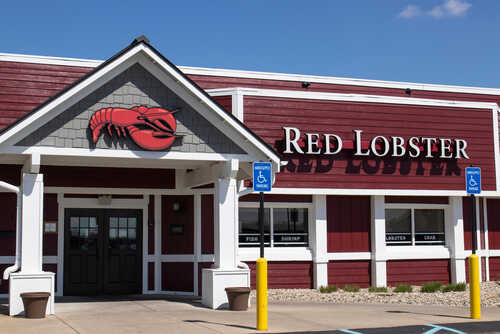
The most famous chain-restaurant billboard in New York’s crossroads of the world is going dark, and the real story behind that darkened neon says far more about power, policy, and priorities than about shrimp and cheddar biscuits.
Story Snapshot
- Red Lobster’s Times Square flagship is shutting its doors on June 14 after a 23-year run.
- The company blames years of heavy construction and a looming office-to-apartment conversion for killing the economics of the site.
- The closure lands in the shadow of Red Lobster’s bankruptcy and more than 100 other locations going away nationwide.
- The story exposes how big-city redevelopment, government policy, and corporate missteps collide on the same corner.
A Times Square Landmark Built On Shrimp, Tourists, And Spectacle
Red Lobster planted its flag at 5 Times Square in the early 2000s, turning a three-story seafood joint into a kind of middle-America embassy in the most expensive crossroads in the country.[2][3]
The restaurant became a dependable stop for families who knew the brand from the suburbs but wanted a predictable meal after Broadway or between sightseeing stops.[3] Tour guides used it as a landmark, social media treated it as kitsch, and the chain treated it as a flagship.[2]
Over 23 years, that single restaurant survived terror scares, recessions, and a pandemic that emptied Midtown.[2] If you want proof of how durable the concept once looked, consider how many more fragile Times Square concepts came and went while those red letters stayed bolted to the facade.
The place remained a visual constant on a corner where billboards and brands change like a flipbook.[1][2] That makes the decision to pull out now more revealing than a simple “bad quarter.”[2]
Red Lobster to close Times Square restaurant after more than 20 years https://t.co/1XYXrwVQOm
— FOX Business (@FoxBusiness) June 1, 2026
The Official Explanation: Construction And Conversion Choked The Business
Red Lobster’s statement to local media painted a clear cause-and-effect: prolonged, extensive construction at 5 Times Square hammered access, visibility, and foot traffic so hard that continuing to operate was “no longer viable.”[1][3]
Scaffolding wrapped the exterior, blocking signage and forcing the chain to hang banners that begged pedestrians to notice it was “open during construction.”[1] Anyone who has walked under New York scaffolding knows what that does to impulse dining decisions.
The company also pointed directly to the building’s planned conversion from offices into residential apartments, a project backed by New York State’s Empire State Development agency.[1][2][3]
As the tower transitions away from active office space, daily flows of office workers that once helped fill seats disappear.[1][2] Red Lobster argued that a future filled with residents upstairs did not justify the present pain and the expensive wait; the math, they said, simply stopped working.[2][3]
What The Company Does Not Emphasize: Bankruptcy, Closures, And Rent Reality
Outside the press release, the story looks less like a one-off casualty and more like one tile in a much larger mosaic of retreat.[2] Trade reporting shows Red Lobster has closed more than 100 locations across the country around its Chapter 11 bankruptcy in 2024, and the Times Square restaurant appeared on an internal list of potential closures that same month.[2] That timing tells you the New York flagship was already on the chopping block before the latest scaffolding went up.
Coverage also points out that the owners of 5 Times Square sought more than $2 million in annual rent from Red Lobster in 2024.[2] That figure reflects a broader reality any taxpayer can grasp: when government policy and big landlords drive city-center costs this high, only brands with sky-high margins or heavy subsidies can survive long term.
Redevelopment, Government, And Who Gets Left Holding The Bill
The state’s Empire State Development organization is working with New York City to turn vacant office floors in 5 Times Square into “hundreds of apartments.”[1]
Advocates frame this as a smart reuse of post-pandemic office glut. On paper that sounds efficient: more housing, less empty office space. But during the conversion, the ground-floor business sits in a tunnel of plywood and metal, watching customers peel away while planners and developers argue over permits and timelines.[1][3]
🚨 END OF AN ERA:
The Red Lobster in Times Square is closing after 23 years in operation.
The iconic Midtown location will reportedly shut its doors due to ongoing construction impacts in the area.#NYC #TimesSquare #RedLobster #Manhattan #UnfiltNY pic.twitter.com/b6fUSCzEhw
— UnfiltNY | NYC News (@UNFILTNY1) June 1, 2026
From a common-sense perspective, this is another example of policy and planning that rarely accounts for the mom-and-pop worker—or in this case, the line cook and server—disrupted downstairs.
Red Lobster says employees are being offered transfers to other locations and extra pay to bridge the transition.[3] That is decent corporate behavior as these things go, but it does not answer the deeper question: why should ordinary workers pay the price for elite experiments with zoning, subsidies, and mega-rents?
End Of An Era, Or Just The Latest Warning Signal?
Locals on social media alternated between cheering the demise of a chain in Times Square and mourning a quirky staple of out-of-town visits.
Some called it “the end of an era,” others joked that rival chains should be worried next. That split reaction tells you something about modern urban life: people rail against “corporate blandness” until they need a familiar, family-friendly place that will not hijack their wallet or their values.[2]
The Times Square Red Lobster will serve its last plate on June 14.[1][2][3] By itself, it is one restaurant closing. Put in context, it is a neon-red warning about what happens when high taxes, aggressive redevelopment, and wobbly corporate decisions collide at street level.
Tourists will still flood the intersection, the billboards will still glow, and another tenant will eventually fill the space. The question is whether the next brand—and its workers—can survive the same stacked deck.
Sources:
[1] Web – Red Lobster to close Times Square restaurant after more than 20 years
[2] Web – Red Lobster’s Flagship Times Square Restaurant Is Closing After 23 …
[3] Web – Red Lobster to close Times Square location, citing construction