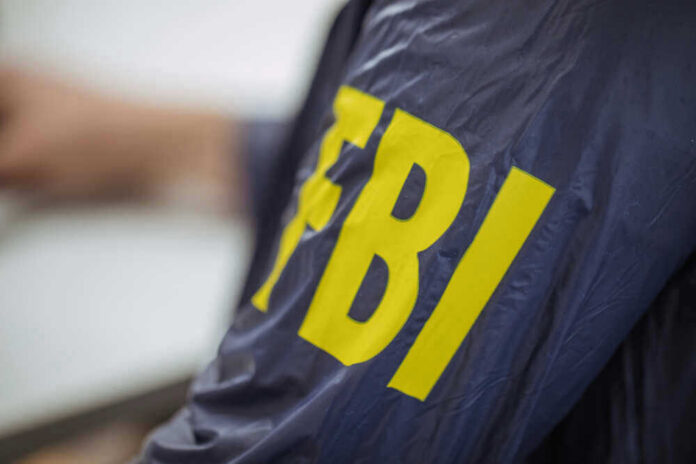
Ten hostages walked out alive after a 15-hour siege because the Federal Bureau of Investigation (FBI) ended it with a single irreversible act.
Story Snapshot
- Police say all hostages were recovered unharmed after an hours-long Bakersfield standoff ended with an FBI shooting [1].
- Authorities responded to a bomb threat; the suspect claimed to have explosives and law enforcement reported seeing devices on him [1].
- Negotiators worked for more than 15 hours; two hostages were released before the final action [1][2].
- Key tactical details, footage, and forensic findings have not been publicly released, leaving the precise shoot-decision moment unclear [1][2].
What happened inside that Bakersfield office tower
Bakersfield police say a hostage crisis began after a bomb-threat call to a downtown Chase Bank building just after 1 p.m., driving evacuations and a rapid law-enforcement surge [1]. The standoff stretched through the night, with a crisis negotiation team working the phones and tactical teams setting containment.
Officials described a suspect who claimed to have explosives and, according to authorities, had devices visibly attached to his body. Two hostages were released during negotiations; hours later, the FBI shot and killed the suspect and recovered all remaining hostages unharmed [1][2].
Law enforcement framed the situation as an acute public-safety threat. Officials said the suspect had a history of violence and was a registered sex offender, context that likely elevated the perceived risk calculus for negotiators and tactical commanders [1].
The reported observation of explosives tightened that calculus further. If an assailant credibly shows bomb capability while holding multiple captives, the window for persuasion narrows to moments where movement, agitation, or a visible trigger presents an unacceptable risk to innocent life [1][2].
Why the outcome frame will dominate until records surface
Early reports emphasize outcomes because results are undeniable: ten people out alive, one suspect dead, no reported hostage injuries [1][2]. That success story travels faster than the slower work of reconstructing who saw what, when, and how the final decision formed.
The public record so far lacks body-camera footage, a detailed tactical timeline, or bomb-squad forensics that confirm whether the devices were real, inert, or decoys. That evidence gap keeps the necessity judgment partly in the dark, even as the result appears to validate the call [1][2].
#Breaking FBI kills man holding hostages in California. @WKRN pic.twitter.com/B8bKEa4bRs
— Megan Fee (@meganfeetv) June 3, 2026
Common sense prioritizes the innocent. When a suspect announces explosives, straps apparent devices to his body, and confines hostages for 15 hours, the presumption shifts toward decisive rescue if negotiations stall.
That said, prudence demands transparency after the danger passes. Agencies should release an incident timeline, negotiator logs, and explosives findings to maintain public trust. Clear records protect good officers from armchair cynicism and deter future misconduct where it exists [1][2].
The decision chain that likely guided the shot
Hostage doctrine tends to revolve around three gates: capability, intent, and proximity. Authorities reported capability through visible devices; they cited intent via verbal bomb threats; and proximity was inherent in a confined office space with tied-up captives reported by some outlets.
Two releases showed negotiations had traction, but they did not remove the bomb variable. If the suspect moved into a posture that signaled imminent detonation or harm, commanders would default to lethal force to protect hostages, which aligns with long-established rescue principles [1][2].
BAKERSFIELD, CALIFORNIA
🚨Breaking – The man who took hostages in school district offices in a downtown Bakersfield building before he was killed Wednesday in a shooting was Anthony Scott Searles-Harris, 41, FBI special agent in charge Sid Patel said at a news conference.… pic.twitter.com/tbKDiTM4Ah
— Sid (@Trending_Sid) June 3, 2026
Reasonable skepticism survives alongside gratitude. The public deserves to know whether the suspected explosives were functional, what the exact trigger for the shot was, and whether less-lethal options were viable at that second.
If the FBI’s observations match forensic proof, confidence will harden around the necessity argument. If devices prove fake, the moment-by-moment record becomes even more important; officers do not need to be right about the devices being live, they need to be reasonable given what they saw and heard at the time [1][2].
What accountability should look like next
Agencies should publish a thorough after-action review with timestamps, radio traffic excerpts, and negotiator summaries, paired with bomb-squad reports and photographs with redactions for operational security.
That package should identify policy triggers that were met and explain why continued negotiation would have increased risk to hostages. This level of disclosure resists the easy narrative that outcome equals justification while still honoring the obvious: ten families were spared the unthinkable because officers took responsibility for a brutal decision [1][2].
Sources:
[1] Web – FBI fatally shoots a man holding hostages in a California office …
[2] Web – Suspect in Bakersfield standoff shot and killed by … – ABC7 Chicago